Skip to content
Homeowners often use tree trimming and tree pruning interchangeably, but these services serve different purposes. Trimming focuses on controlling a tree’s size and shape, while pruning removes specific branches to support tree health, improve structure, and address safety concerns.
Knowing the difference between tree pruning vs. trimming can help you choose the right service, avoid unnecessary work, and protect the trees on your property.
For homeowners on Massachusetts’ South Shore, proper tree care is especially important. Coastal winds, heavy snow, ice storms, and pests can stress trees year-round. Regular inspections and well-planned maintenance can help identify problems before they become expensive repairs.
In this guide, we’ll explain how trimming and pruning differ, when each service is appropriate, how to find the best tree pruning services, what tree trimming work is common in the area, and how to decide what your trees need. Let’s take a closer look now at the tree trimming vs. pruning decision.
What Is Tree Trimming?
Tree trimming focuses on managing a tree’s or shrub’s size, shape, and appearance. People often use it to keep landscaping neat, prevent overgrowth, and maintain clearance around buildings, walkways, and driveways.
Trimming is most common for ornamental trees, hedges, and shrubs that need regular shaping. It can also help manage branches that interfere with outdoor lighting, block windows, or grow too close to structures.
Tree Trimming Tools
The tools used depend on the size and location of the branches. Common tree trimming tools include:
- Hand shears: For small stems and light growth.
- Hedge trimmers: For shaping hedges and shrubs.
- Loppers: For thicker branches that hand shears cannot cut.
- Pole saws: For reaching higher branches from the ground.
- Professional equipment: For taller trees and hard-to-reach areas.
Sharp, well-maintained tools help create cleaner cuts. However, choosing the correct cutting technique matters just as much as choosing the right equipment.
When Is Tree Trimming the Right Choice?
Trimming may be appropriate when:
- A healthy tree or shrub has grown beyond its intended shape.
- Branches are obstructing windows, walkways, or driveways.
- Landscaping needs a cleaner, more consistent appearance.
- Growth needs to be managed around structures, where appropriate and safe.
- Hedges or ornamental plants need routine maintenance.
Trimming is not a substitute for correcting structural problems. If a tree has dead branches, signs of decay, or limbs that may fail, a professional assessment can determine whether pruning or another form of tree care is needed.
What Is Tree Pruning?
Tree pruning involves selectively removing branches to improve a tree’s health, structure, and safety. Unlike routine shaping, pruning focuses on what the tree needs to grow well and remain structurally sound.
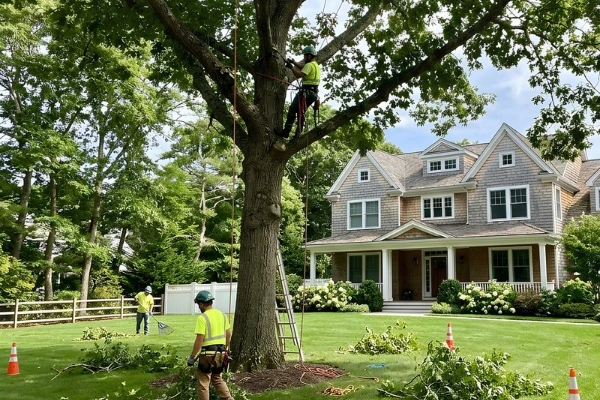
A trained arborist considers the tree’s species, age, branch arrangement, and overall condition before deciding what to remove. Pruning may involve removing dead or diseased wood, addressing crossing branches, improving clearance, or correcting developing structural problems.
Common Tree Pruning Techniques
Different pruning methods address different concerns.
Crown thinning removes selected branches throughout the canopy to improve light and air movement. The goal is to maintain a balanced crown without removing too much healthy growth.
Crown raising removes selected lower branches to provide clearance over driveways, walkways, and other areas. It can also improve visibility around a property.
Crown reduction carefully reduces a tree’s height or spread by cutting branches back to suitable lateral branches. This differs from topping, which cuts major branches back indiscriminately and can seriously damage the tree.
Deadwood removal targets dead, broken, or dying branches that may fall or provide entry points for decay.
The right method depends on the tree’s condition and the reason for pruning. Not every tree needs every technique, and removing too much growth can do more harm than good.
Tree Pruning Tools
Professional pruning requires tools suited to branch size and the type of cut.
- Hand pruners: For small branches and shoots.
- Loppers: For thicker branches within the tool’s rated capacity.
- Pruning saws: For larger branches that require controlled cuts.
- Chainsaws and professional climbing or lifting equipment: For qualified crews handling larger limbs and mature trees.
Tools should be sharp and maintained, with appropriate cleaning when needed to reduce the spread of certain plant diseases. Work involving chainsaws, overhead branches, ladders, or power lines can be dangerous and is best left to trained professionals.

Tree Pruning vs. Trimming: Key Differences
Both services help maintain trees, but the main difference is the goal.
| Feature | Tree trimming | Tree pruning |
| Main purpose | Manage size and appearance | Improve health, structure, and safety |
| Typical work | Shape overgrown outer growth | Remove selected dead, diseased, crossing, or poorly positioned branches |
| Common uses | Hedges, ornamental trees, and overgrowth | Mature trees, structural concerns, and damaged branches |
| Timing | Depends on species, growth, and the work required | Depends on species, tree condition, and pruning goals |
| Main consideration | Avoid excessive cutting and poor shaping | Make selective cuts that preserve the tree’s structure |
| Professional help | Useful for tall trees and difficult access | Important for structural issues, mature trees, and hazardous branches |
Which Service Do You Need?
The simplest way to decide is to consider the problem you’re trying to solve.
- Choose trimming when a healthy tree or shrub needs shaping or has grown beyond its intended space.
- Consider pruning when branches are dead, diseased, crossing, damaged, or poorly positioned.
- Request an arborist’s assessment when the tree has large limbs over a roof, visible decay, significant storm damage, or an uneven or weakened structure.
- Discuss removal if the tree may be dead or too severely damaged to manage safely through pruning alone.
Some trees need both trimming and pruning at different times. A professional evaluation can help you avoid unnecessary work while ensuring important structural problems aren’t overlooked.
When Is the Best Time to Trim or Prune Trees in Massachusetts?
The best time depends on the tree species, its condition, and the reason for the work. No single schedule applies to every tree.
Tree Trimming Timing
Light shaping and routine trimming may be possible at different times of the year, depending on the species and the type of growth being removed. However, heavy cutting or trimming at the wrong time can stress a tree or remove developing flower buds.
If a tree is growing into a structure or creating an immediate hazard, do not wait for a seasonal maintenance window. Have a qualified tree professional assess the situation.
Tree Pruning Timing
For many deciduous trees in Massachusetts, late winter is a useful time for planned pruning. With the leaves gone, the branch structure is easier to inspect, and many trees are dormant.
However, the right timing varies:
- Oak trees: Avoid unnecessary pruning during periods of elevated oak wilt risk. Massachusetts guidance generally cautions against pruning oaks during the warmer months when disease-spreading insects are active. Ask an arborist about the appropriate local timing.
- Spring-flowering trees: Many should be pruned after flowering to avoid removing next season’s flower buds.
- Fruit trees: Often benefit from species-specific pruning schedules, commonly during dormancy.
- Storm-damaged trees: May need prompt assessment regardless of the season.
Rather than relying on a fixed list of months to avoid, schedule pruning based on the species, local disease risks, and the work required.

Common Tree Pruning Mistakes to Avoid
Poor pruning can weaken a tree, increase decay, and create problems that may not become obvious for several seasons. These are some of the most common mistakes.
1. Topping a Tree
Topping involves cutting large branches back to stubs to reduce a tree’s height or spread. It removes substantial canopy and often triggers fast-growing shoots that are weakly attached.
These shoots may be more likely to break as they grow. Topping can also expose the tree to decay and long-term decline. If a tree is too large for its location, ask an arborist whether selective crown reduction or removal is more appropriate.
2. Making Incorrect Cuts
Cuts made too close to the trunk can damage the branch collar, the area of tissue that helps a tree respond to a pruning wound. Cuts that leave long stubs can also interfere with proper wound closure.
Correct pruning cuts preserve the branch collar and follow the appropriate cutting technique for the branch being removed.
3. Removing Too Much Growth
A tree needs its leaves to produce energy. Removing too much live canopy at once can weaken it and make recovery harder.
The amount you can safely remove varies by species, age, condition, and circumstances. Avoid aggressive pruning without professional guidance, especially on mature or stressed trees.
4. Pruning at the Wrong Time
Pruning at the wrong time can increase disease risk or remove buds needed for flowering. Oak trees require particular care because of oak wilt concerns.
Before scheduling major work, confirm the best timing for your tree species and local conditions.
5. Attempting Hazardous Work Yourself
Cutting high branches, handling heavy limbs, or operating a chainsaw near a house can lead to serious injuries and property damage. Branches under tension can also move unexpectedly when cut.
For large trees, overhead limbs, storm damage, or work near utility lines, hire qualified professionals rather than attempting the job yourself.
Tree Care Considerations on the South Shore- Tree Pruning vs. Trimming
Trees on the South Shore face several environmental challenges that can affect their health and stability. Coastal exposure, winter storms, and regional pests make regular inspections an important part of property maintenance.
Prepare Trees for Storms
Nor’easters, strong winds, ice, and heavy snow can put considerable pressure on branches and root systems. Dead limbs, damaged branch unions, and existing decay may increase the chance of failure.
A professional tree inspection can identify concerns such as:
- Dead or broken branches above roofs and driveways.
- Branches rubbing against buildings or one another.
- Visible cracks or weak connections between major limbs.
- Signs of decay or storm damage.
- Branches that need clearance over frequently used areas.
Selective pruning can address some of these concerns, but it cannot guarantee that a tree will withstand severe weather. Trees with serious structural defects may need a different solution.
Watch for Pests and Tree Disease
Massachusetts trees can also face pressure from insects and disease.
The emerald ash borer has damaged ash tree populations statewide. Warning signs can include thinning crowns, branch dieback, and small, D-shaped exit holes in the bark. These symptoms warrant an assessment because other issues can produce similar signs.
Winter moth and spongy moth can also damage trees through repeated or severe defoliation. Affected trees may become more vulnerable to other stresses, especially when they are already weakened.
If you notice unusual leaf loss, dead branches, bark damage, or a declining canopy, ask a tree professional to identify the likely cause before deciding what work is needed. Pruning may help with dead or damaged branches, but pest or disease problems sometimes require other treatments or tree removal.

How Much Does Tree Trimming Cost?
Tree trimming cost varies with the size and condition of the tree, the number of trees involved, site access, and the complexity of the work. A small ornamental tree in an open yard usually requires less work than a mature oak with large branches over a home.
| Cost factor | Why it matters |
| Tree size and height | Larger trees often require more labor and specialized equipment. |
| Number of trees | Multiple trees may affect the overall job estimate. |
| Access | Tight spaces, fences, and nearby structures can make work more difficult. |
| Branch condition | Dead, damaged, or unstable limbs may require additional precautions. |
| Cleanup and disposal | Removing and hauling away branches can affect the total price. |
| Work required | Routine shaping differs from structural pruning or storm-damage work. |
No reliable price applies to every property. An on-site estimate lets the tree service assess the work, explain the recommended approach, and provide a more accurate quote.
Why Hire a Professional Tree Service?
Tree care involves more than cutting branches. A qualified professional can assess tree structure, spot signs of disease or decay, and determine whether trimming, pruning, treatment, or removal is the best option.
Before hiring a company, ask about:
- Appropriate licensing or credentials for the work and location.
- Liability insurance and workers’ compensation coverage.
- Experience with your tree species and the work required.
- Cleanup, debris removal, and what the estimate includes.
- Whether the proposed work follows accepted tree-care practices.
Insurance and qualifications matter most when work takes place near homes, vehicles, fences, or utility lines.
Shore Tree Service offers free onsite estimates for tree trimming, pruning, and other tree care services throughout Quincy, Braintree, Weymouth, Hingham, Milton, Brockton, Plymouth, Marshfield, Scituate, Cohasset, and surrounding South Shore communities.
Schedule Tree Trimming or Pruning on the South Shore
Not sure whether your trees need trimming or pruning? Shore Tree Service can assess their condition, discuss your concerns, and recommend an appropriate approach for your property. We can help you understand the distinction between tree pruning vs. trimming and determine which is best for your property.
Whether you need routine shaping, dead branch removal, structural pruning, or a post-storm inspection, professional advice can help you make an informed decision before a small concern becomes a larger problem.
Contact Shore Tree Service for a free on-site estimate and to determine the best answer in the tree trimming vs. pruning debate. We serve homeowners and businesses throughout the South Shore and surrounding Norfolk and Plymouth County communities. Call to discuss your tree care needs or use our contact form to schedule a visit.

Frequently Asked Questions
What months should you not prune trees in Massachusetts?
The best time to prune depends on the tree type and what needs to be done. Oaks need special care during warmer months because of the risk of oak wilt, while spring-flowering trees are often best pruned after they bloom. If you’re unsure about timing, a local arborist can help you plan. Have hazardous or storm-damaged branches assessed promptly.
Is trimming the same as pruning?
Not quite. Tree trimming mainly keeps a tree or shrub neat and manages its size, while pruning focuses on removing specific branches to improve the tree’s health, structure, and safety. Depending on the tree’s condition, you may need one service or both.
What is the 1-2-3 rule for pruning trees?
The 1-2-3 rule is a three-cut method for removing large branches without tearing the bark. The first two cuts remove the branch’s weight in stages, and the final cut removes the remaining stub just outside the branch collar. Because large branches can be dangerous to handle, a trained tree professional should do this work.
What are the most common tree pruning mistakes?
Common mistakes include cutting off too much canopy, topping a tree, cutting too close to the trunk, and leaving branch stubs behind. Pruning at the wrong time of year can also cause problems for certain species. Using the right technique and removing only the branches needed helps keep your tree healthy.
How do I know if my tree needs trimming, pruning, or removal?
It depends on what you’re noticing. If your tree is healthy but has become overgrown, trimming may be all it needs. Dead, damaged, or crossing branches may call for pruning. If the tree is dead or has serious structural problems, you may need to remove it. A professional assessment can help you understand your options and choose the safest approach.