Skip to content
Summary Highlights
| Cutting a tree limb the right way improves tree health, protects your property, and prevents injuries—especially in storm-prone areas like South Shore, MA. This guide explains safe DIY tree limb removal, from selecting pruning shears, loppers, saws, and chainsaws, to using the 3-cut method and controlled limb drops. Learn when to trim for aesthetics, growth, or safety, and how seasonality affects pruning results. |
While trees add beauty, shade, and value to your property, overgrown or damaged branches can quickly become a hazard. Learning how to cut a tree limb properly not only protects your home and loved ones but also promotes the long term health of the tree. When you need South Shore tree care services, trusting the local experts is always the best answer.
Let’s walk through everything you need to know about trimming a tree limb safely and effectively in South Shore, MA from proper pruning steps and tools to knowing when to call in professional tree cutting contractors. Let’s take a closer look at how professional South Shore tree experts can help with all of your tree branch removal and cleanup needs.
Why Proper Tree Limb Removal Matters
When you cut back tree branches correctly, you’re doing more than keeping your yard tidy. You’re investing in your property’s safety, your tree’s health, and even your curb appeal.

Aesthetic & Health Reasons to Cut Back Tree Branches
Tree branch removal isn’t just about appearances. It supports proper tree trimming and pruning that:
- Promotes healthy growth
- Reduces the risk of disease
- Enhances curb appeal
- Encourages better air circulation
Safety and Property Protection
Dead or overgrown limbs can break off during storms or heavy winds, causing damage to your home, vehicles, or people nearby. Learning how to remove tree limbs safely helps prevent these issues while keeping your property secure.
Tools You’ll Need to Cut a Tree Limb Safely
Before you start removing tree limbs, gather the necessary tools and safety gear to complete the job correctly and without injury:
Essential Tree Limb Cutting Tools
Pruning shears (for small branches)
These compact tools give you the precision needed for clean cuts, promoting healthy growth. When using pruning shears, aim for a 45 degree angle to guarantee a smooth removal of tree limbs. This helps minimize potential damage and promotes quicker healing.
Loppers (for mid-size limbs)
Loppers are perfect for cutting mid size tree limbs and are a key tool for South Shore tree care services. To safely remove limbs with loppers:
- Choose a high quality, sharp pair suitable for the limb’s diameter
- Inspect the limb for cracks or hazards
- Maintain stable footing and use both hands
- Cut at a 45 degree angle for clean healing
Hand saws and pole saws
Hand saws work well for thick but reachable branches, while pole saws give you access to tall limbs without a ladder. Both tools help you maintain accuracy and safety when removing tree limbs out of reach.
Chainsaws for large branches
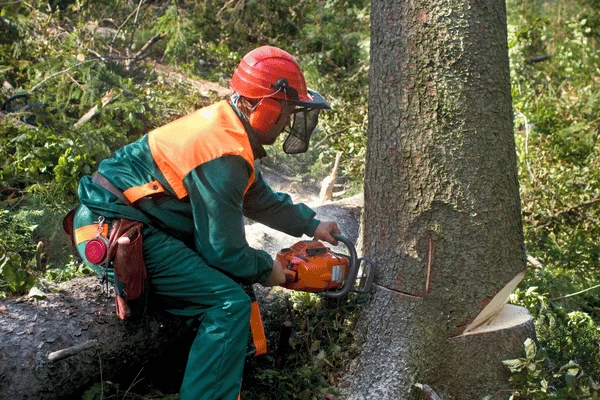
Chainsaws are best for cutting large or heavy branches. Always prioritize safety: wear gloves, goggles, and a helmet, and ensure your footing is secure. Use a chainsaw only if you’re experienced, and never operate it near power lines or unstable ground.
Protective Gear and Equipment
To safely tackle large tree limbs, having the right protective gear and equipment is essential. Here’s what you need:
- Safety goggles – Protect your eyes from flying debris
- Heavy-duty gloves – Safeguard your hands
- Helmet – Shield your head from falling limbs
- Steel-toed boots – Prevent foot injuries
- Ladder or lift – Reach high branches safely
Controlled limb drops are also critical when learning how to cut a tree limb properly. They help guide the limb’s fall, preventing damage to surrounding areas and reducing the risk to people or property below.
Safety goggles
Safety goggles are essential when cutting tree limbs, as they protect your eyes from flying debris, wood chips, and dust. Whether you’re using a saw or working from a ladder, clear vision is critical.
Gloves
Gloves protect your hands and improve grip. Choose snug, cut resistant, waterproof ones for safe handling.
Helmet
A sturdy helmet guards against falling limbs and debris, especially when working overhead. Opt for a helmet with a built in face shield for added protection.
Ladder or lift
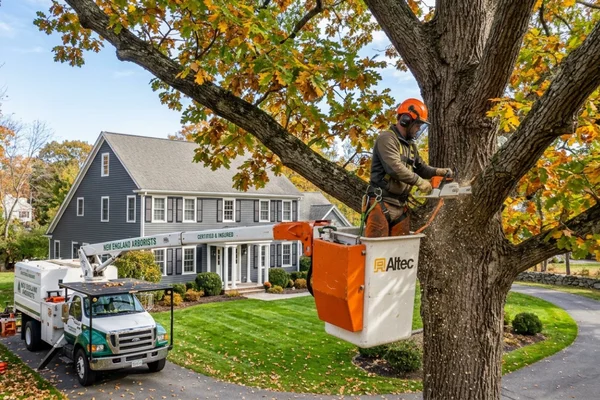
To reach higher limbs, use a secure ladder or mechanical lift. Consider the limb’s height, your comfort with heights, and the ground’s stability. If access is challenging or hazardous, hiring tree cutting contractors may be the safest option.
Role for Controlled Limb Drops
This method involves cutting in a way that guides the limb’s fall, preventing damage to people, property, or the tree. Plan each cut to manage direction, speed, and safety.

Step by Step Guide: How to Cut a Tree Limb
Cutting a tree limb safely and cleanly requires the right approach. The three cut method is a proven technique that protects both you and the tree.
Step 1 – Evaluate the Limb and Plan the Cut (3 Cut Method)
Check the limb’s size, condition, and surroundings. Look for hazards like power lines or structures, and choose tools that match the limb’s thickness and height.
In South Shore, MA, where storms and wind are common, it’s essential to remove any dead or hazardous limbs before they become a threat.
Step 2 – Make a Notch Cut (Undercut)
About 12–18 inches from the trunk, make a small cut on the underside of the limb, one third of the way through. This prevents bark from tearing when the limb falls to the ground.
Step 3 – Perform the Main Cut from the Top
A few inches beyond the notch, cut down from the top until the limb detaches. Work slowly and watch its movement to ensure a safe drop. A steady hand and clear escape route are key to maintaining safety during this step.
Step 4 – Final Cut at the Collar
Finish with a clean collar cut to protect the tree. Make the final cut just outside the branch collar (the swollen area near the trunk). This helps the tree heal naturally and reduces the risk of disease.
Local Tips for Cutting Tree Branches in South Shore, MA
Before you start cutting, it’s worth considering the best time of year and the types of trees commonly found in the South Shore. Both can impact how and when—you should remove limbs and how to best approach tree branch removal. It i worth investing a little time to consider these factors before jumping into your South Shore tree care project.
Seasonality Matters
When is the best time to cut back tree branches?
- Late winter: Ideal for encouraging new growth
- Early summer: Best for shaping
- Fall: Great for removing damaged or dead tree limbs
Avoid heavy pruning during spring when trees are actively growing and vulnerable.
Common Trees in South Shore That May Need Limb Removal
In South Shore, MA, trees such as maple, oak, and birch often develop large or overgrown limbs that require attention. Regular pruning improves their health and reduces risks during spring.
When to Call Professional Tree Cutting Contractors
Some tree limb removal tasks are too risky or complex to be handled as a DIY project. Here’s when to hire the pros:
Large limbs near power lines
Never attempt the removal of tree limbs near power lines. This is extremely hazardous and should only be handled by licensed tree cutting contractors who are trained in removing tree limbs safely. Consider these points:
- Risk of power outages
- Danger of electrocution
- Property damage
- Legal liability
High or hard to reach branches
Tree limbs close to power lines can be a clear danger, but high or hard to reach branches also pose significant risks. If you can’t safely access these limbs, it’s best to call professional tree cutting contractors.
Rot or fungus around the base
If your tree shows signs of disease or decay, cutting it improperly could cause further damage. Let a contractor assess and safely remove the limb.
Cost of Tree Limb Removal in South Shore, MA
Prices vary depending on the size of the limb, accessibility, and potential hazards. Here’s a rough estimate:
- Small limbs: $100–$200
- Medium limbs: $200–$350
- Large/hazardous limbs: $350–$500 or more
Tree Care After Limb Removal
After removing a limb, proper tree care helps prevent disease and encourages healing.
Proper Wound Care and Monitoring
- Clean the wound with water no need for paint or sealants
- Watch for signs of disease or pests
- Avoid piling mulch or soil around the base of the trunk
Encouraging Healthy Regrowth
- Water regularly, especially during dry weather
- Add mulch to retain moisture and regulate soil temperature
- Prune weak or dead branches as needed
Need Help? Call Trusted Tree Cutting Contractors in South Shore, MA
Whether you’re dealing with overgrown limbs, storm damage, or questions about how to cut a tree limb, don’t take chances. You do not have to go at it alone and risk injury or further damage trying to do it yourself. Call your South Shore, MA tree care experts and let us go to work for you!
Whether it’s one limb or an entire tree, our local South Shore tree care experts offer safe and affordable limb removal services. Contact us today for a free estimate and to learn more about our tree branch removal services!
Frequently Asked Questions About Tree Branch Removal
What should you know before removing a tree limb?
Before removing a tree limb, assess the tree’s health and the limb’s location. Identify whether the limb is dead, diseased, or simply overgrown. Consider surrounding hazards, such as power lines, structures, or uneven ground. Ensure you have the correct tools, understand how to safely remove tree limbs using the 3 cut method, and have a disposal plan in place. Proper preparation helps you avoid injury and prevents unnecessary damage to the tree.
Do I need a permit to cut a tree limb in South Shore, MA?
You typically don’t need a permit to cut a small tree limb on your private property. However, if the tree is located near public land, is part of a protected species, or falls within a conservation area, you may need approval from the local Department of Public Works or tree warden. Always check local guidelines before starting to avoid potential violations or fines.
How much can I cut without hurting the tree?
To avoid stressing the tree, never remove more than 25% of its canopy in a single year. Focus on pruning dead, diseased, or hazardous limbs rather than healthy, large branches. Always make clean cuts outside the branch collar and avoid cutting during periods of active growth or extreme weather conditions. For optimal results, prune during the dormant season, typically in late winter or very early spring.
Can I cut a limb touching power lines myself?
No, you should never attempt to cut a limb touching or near power lines yourself. Doing so is extremely dangerous and could lead to electrocution, fire, or property damage. This type of work should always be handled by your utility provider or a certified tree cutting contractor with proper safety equipment and training. Stay safe and avoid legal risk by leaving it to the pros.
What time of year is best for tree limb cutting?
Late winter or early spring is the best time to prune most trees. During this dormant period, trees are less likely to suffer stress or develop disease. Avoid major pruning in fall or late summer when pests and pathogens are more active. Pruning at the right time promotes healthy regrowth and enhances the structural development of your tree.
What should I do with the cut limbs?
After cutting, you can repurpose limbs as mulch, stack them for firewood, or arrange for disposal. Many towns in Massachusetts offer curbside yard waste collection or drop off sites for branches and other types of brush. If the limbs are large or complex to move, consider hiring a local tree service that includes cleanup and removal as part of their work.